Patient guide · Reviewed June 2026
Weight Regain After Gastric Sleeve Surgery — What to Do in Australia
Weight regain after bariatric surgery is one of the most common and least-discussed experiences in Australian obesity medicine. If you had sleeve gastrectomy and the weight is coming back, you are not failing. You are experiencing a recognised, well-documented clinical outcome that affects a significant proportion of patients — and there are now more evidence-based options than ever before.
Published 2026-06-01 · Clinically reviewed 2026-06-03

Patient guide · Reviewed June 2026
How Common Is Weight Regain After Sleeve Gastrectomy?
Studies suggest that approximately 20–30% of patients experience meaningful weight regain within 2–5 years of bariatric surgery, though estimates vary…
Studies suggest that approximately 20–30% of patients experience meaningful weight regain within 2–5 years of bariatric surgery, though estimates vary depending on how weight regain is defined. In most research, weight regain is defined as regaining 25% or more of the maximum weight lost. Some studies use a lower threshold — 10kg or more above the lowest post-surgery weight.
Weight regain typically begins to emerge 2–3 years post-operatively, coinciding with declining incretin hormone responses and potential anatomical or behavioural adaptations.
The causes are multifactorial. They include metabolic adaptation — your body actively defending a higher weight set point — declining satiety hormone production over time, changes in eating behaviour, and in some cases, anatomical changes to the stomach pouch. None of these are personal failures. They are physiological realities of a surgical intervention that alters but does not eliminate the body's weight-regulating mechanisms.
Why This Is Happening — The Hormonal Picture
Sleeve gastrectomy works in part because it alters the production of appetite-regulating hormones, including GLP-1. Post-surgical GLP-1 levels are typically elevated compared to pre-surgical baseline, which helps suppress appetite and improve satiety in the early years following surgery.
Over time, GLP-1 responses can decline. Hormonal trajectories after sleeve gastrectomy show that long-term outcomes include declining incretin responses that correlate with weight regain. This is the physiological basis for why GLP-1 receptor agonists have emerged as a logical pharmacological adjunct for post-bariatric patients with weight regain — they restore and amplify the same hormonal signalling the surgery initially enhanced.
Patient guide · Reviewed June 2026
Option 1 — GLP-1 Medications
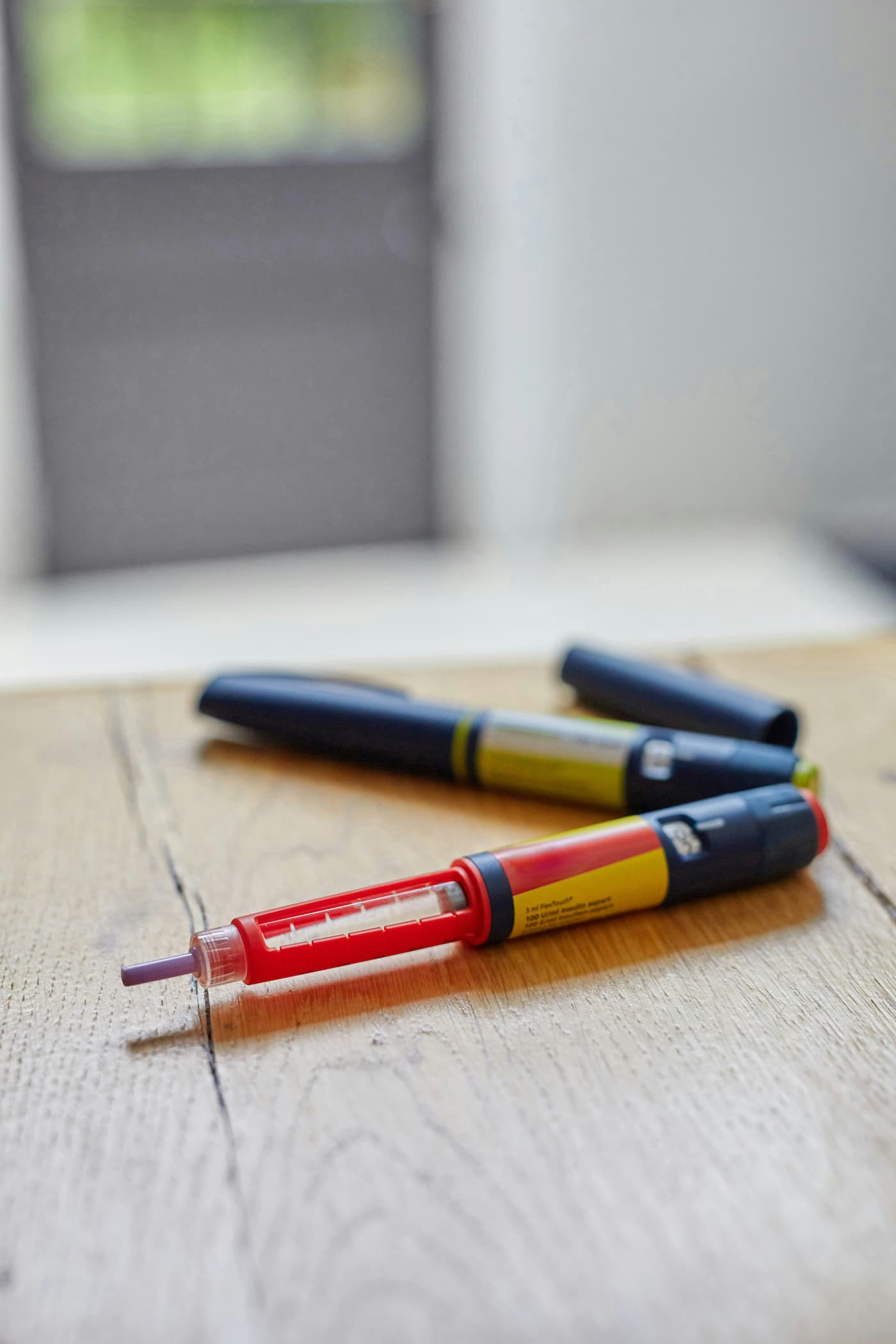
GLP-1 receptor agonists — Ozempic, Wegovy, and Mounjaro — have emerged as the leading pharmacological option for managing weight regain after bariatric surgery.
GLP-1 receptor agonists — Ozempic, Wegovy, and Mounjaro — have emerged as the leading pharmacological option for managing weight regain after bariatric surgery.
The evidence base is now substantial. A 2025 systematic review and meta-analysis — based on a pooled cohort of 964 treated individuals across eight retrospective studies — found that tirzepatide produced a percentage total weight loss of approximately 13.6% and semaglutide approximately 11% in post-bariatric patients with weight regain. These are meaningful reductions even in patients whose weight loss response is partially blunted post-surgically.
GLP-1 receptor agonists help regulate satiety and appetite, making them a reasonable treatment option for long-term weight management in post-bariatric surgical patients who have weight regain.
Initiation of GLP-1 therapy in post-bariatric patients has increased markedly — from 9 patients in 2015 to 4,983 in 2024 in one large observational dataset, with semaglutide accounting for 57.8% of all initiations.
What to discuss with your surgeon or GP:
GLP-1 medications are generally safe after sleeve gastrectomy. Dose titration may proceed at a standard schedule. Gastric emptying is already altered post-surgically, so GI side effects during dose escalation should be discussed with your managing doctor. A bariatric surgeon with GLP-1 experience or an endocrinologist is the most appropriate prescriber for post-bariatric patients.
Read the full guide: GLP-1 medications after bariatric surgery →
Option 2 — Revision Bariatric Surgery
Revision surgery — converting a sleeve to a Roux-en-Y gastric bypass, or other anatomical revisions — is an option for some patients with significant weight regain where medical management has been insufficient.
Restarting GLP-1 medications may be considered for the following reasons: weight loss eventually plateaus or stalls after bariatric surgery, additional bariatric surgery may not always be possible, and GLP-1 therapy can be more cost-effective over a two-year period in some patients.
Revision surgery requires careful specialist assessment. Not all patients are eligible, and the risk profile of revision procedures is generally higher than primary surgery. Discuss with a bariatric surgeon experienced in revision procedures.


Patient guide · Reviewed June 2026
Option 3 — Structured Lifestyle and Dietitian Support
Weight regain is often accompanied by gradual changes in eating behaviour — larger portions, reduced dietary quality, and decreased physical activity. A…
Weight regain is often accompanied by gradual changes in eating behaviour — larger portions, reduced dietary quality, and decreased physical activity. A structured programme with an Accredited Practising Dietitian who has bariatric experience can address nutritional adequacy, protein intake (critical post-surgery), and long-term eating pattern sustainability.
Resistance training is particularly valuable after bariatric surgery because it preserves muscle mass, which is critical for maintaining metabolic rate during weight loss. Post-bariatric patients who regain weight often have a higher proportion of muscle loss than fat gain — a structured exercise programme supervised by an exercise physiologist addresses this specifically.
Option 4 — Combined Approach
The emerging clinical consensus is that post-bariatric weight management is best handled with a multidisciplinary team — bariatric surgeon, GP or endocrinologist, dietitian, and potentially a psychologist — and that GLP-1 medication combined with dietary and behavioural support produces better outcomes than any single intervention alone.
GLP-1 medications position themselves as complementary to — not a replacement for — surgical and lifestyle management in the post-bariatric context.

Patient guide · Reviewed June 2026
Finding a Bariatric Specialist in Australia
If you have experienced weight regain after sleeve gastrectomy or gastric bypass, your first call should be to your original bariatric surgeon. If you no…
If you have experienced weight regain after sleeve gastrectomy or gastric bypass, your first call should be to your original bariatric surgeon. If you no longer have a managing surgeon, a referral from your GP to a bariatric specialist is appropriate.
GLP-1 Australia lists bariatric surgeons and metabolic specialists across all Australian states and territories.
Find a bariatric surgeon near you →
Find a liver monitoring clinic →
Liver assessment is recommended for all post-bariatric GLP-1 patients.
Liver Monitoring After Bariatric Surgery on GLP-1
Post-bariatric patients starting GLP-1 therapy for weight regain should be assessed for fatty liver disease before commencing. Bariatric patients have a high prevalence of MASLD — the liver health improvements of surgery can partially reverse with weight regain. The MJA September 2025 consensus statement recommends FIB-4 → elastography assessment for all adults with obesity or metabolic risk factors, which includes all post-bariatric patients with weight regain.
What the Australian guidelines say about GLP-1 and liver monitoring →

Find a liver elastography clinic near you
Search by suburb or postcode to see accredited clinics offering FibroScan and guided liver elastography across Australia.
Type a suburb or postcode and press Enter to search nearby.
Request a liver scan appointment
Submit your details and we'll route your request to the most appropriate elastography clinic in your area. Most clinics respond within 1–2 business days.
Take action
Request an appointment
Frequently asked questions
Can I take Ozempic or Mounjaro after sleeve gastrectomy?
Yes — GLP-1 medications are generally safe and increasingly used after bariatric surgery for weight regain management. A 2025 systematic review found both semaglutide and tirzepatide produce meaningful weight loss in post-bariatric patients. Discuss with your bariatric surgeon or GP for appropriate dose titration given your post-surgical physiology.
How much weight can I lose on GLP-1 medications after gastric sleeve?
A 2025 systematic review and meta-analysis found tirzepatide produced approximately 13.6% total weight loss and semaglutide approximately 11% in post-bariatric patients with weight regain. Individual results vary based on post-surgical anatomy, starting weight, and dose.
Is weight regain after bariatric surgery my fault?
No. Weight regain affects 20–30% of bariatric patients and reflects physiological mechanisms — metabolic adaptation, hormonal changes, and anatomical factors — rather than personal failure. It is a recognised clinical challenge with established management options.
Do I need to see my original surgeon?
Ideally yes — your bariatric surgeon has your surgical records and understands your specific anatomy. If that is not possible, a GP referral to a bariatric specialist with access to your surgical records is the recommended pathway.
Should I have my liver checked after bariatric surgery?
Yes. Australian guidelines recommend liver assessment (FIB-4 calculation followed by liver elastography if indeterminate) for all patients with metabolic risk factors, including post-bariatric patients with weight regain. Bariatric patients have a high prevalence of MASLD.
Sources: Natche et al., Cureus 2026 (DOI: 10.7759/cureus.102516); MedCentral GLP-1s for post-bariatric weight management March 2026; Bolt Pharmacy GLP-1 after bariatric surgery March 2026; UChicago Medicine bariatric vs GLP-1 November 2025; MJA MAFLD consensus statement September 2025 (DOI: 10.5694/mja2.70008).
This article is for educational purposes only. It does not constitute medical advice. Always consult your GP or a specialist about your individual health circumstances.
Next step
Find a liver elastography clinic near you
Search participating clinics across Australia, or talk to your GP about a baseline FIB-4 and elastography.