Patient guide · Reviewed June 2026
GLP-1 Medications and Surgery — Why Your Anaesthetist Needs to Know
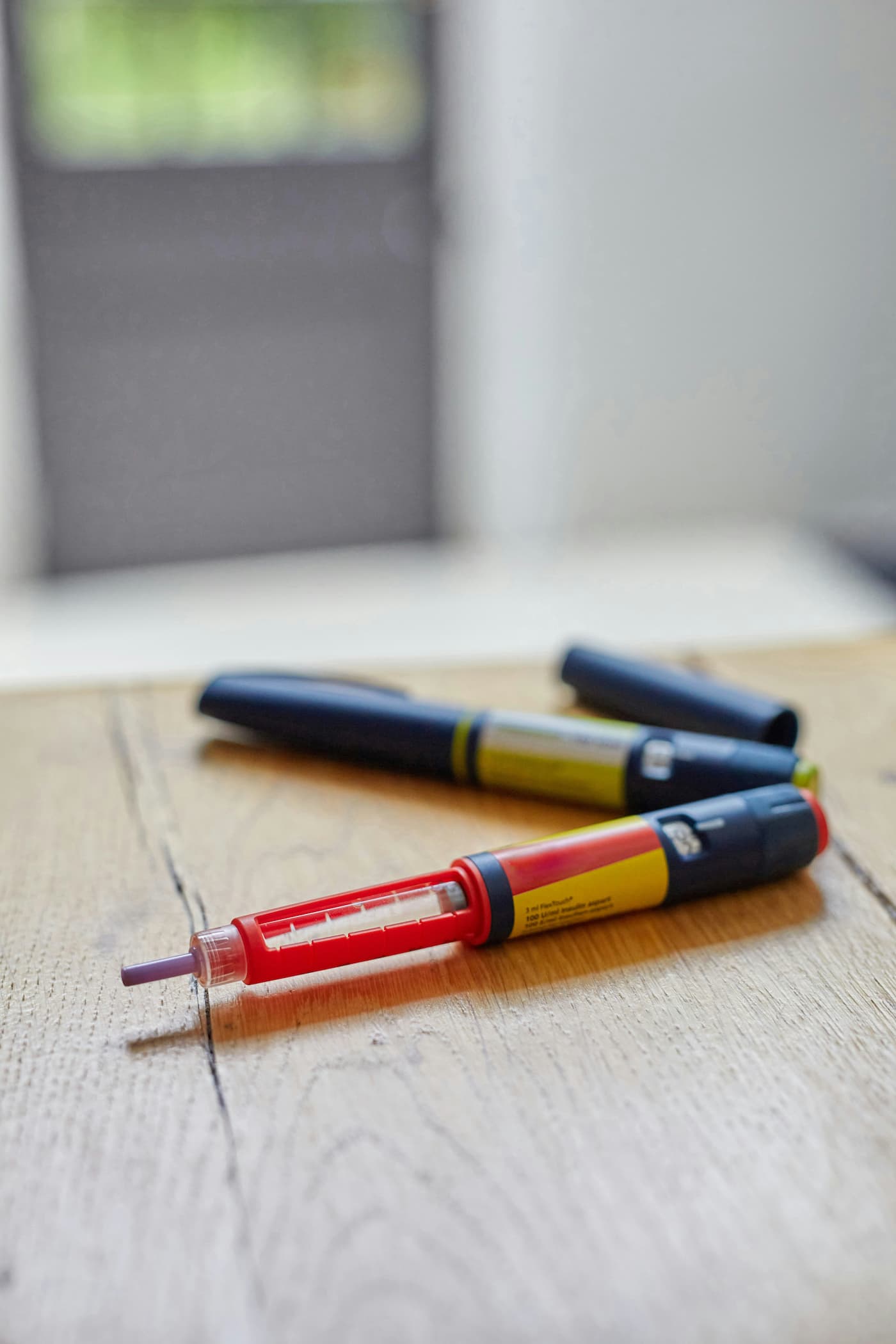
If you're on a GLP-1 medication and have surgery, an endoscopy, or any procedure requiring sedation coming up, there's a specific safety issue your anaesthetic team needs to know about — and Australian clinical guidance now addresses it directly in every relevant medicine's official product information.
Published 2026-06-01 · Clinically reviewed 2026-06-03

Patient guide · Reviewed June 2026
The risk: delayed gastric emptying and aspiration
GLP-1 receptor agonists work partly by slowing gastric emptying — one of the mechanisms behind the appetite suppression that drives weight loss. That same…
GLP-1 receptor agonists work partly by slowing gastric emptying — one of the mechanisms behind the appetite suppression that drives weight loss. That same mechanism creates a real risk during anaesthesia or sedation: if your stomach hasn't fully emptied by the time you're sedated, there's an increased risk of retained gastric contents causing pulmonary aspiration — stomach contents entering the airway, which can cause serious complications.
This isn't theoretical. A clinical guideline developed by multiple Australian and New Zealand professional bodies cites recent case reports and large case series showing a risk of retained gastric contents and pulmonary aspiration during sedation for endoscopic procedures or general anaesthesia in people on GLP-1 receptor agonists. The scale of the underlying risk is sobering context: of the airway-related deaths reported in the UK's Fourth National Audit Project, 50% resulted from aspiration — more than were caused by "can't intubate, can't oxygenate" scenarios.
One striking piece of evidence comes from an ultrasound study: in a prospective observational study of overnight-fasted volunteers, residual intragastric solids were found on ultrasound in 90% of those taking semaglutide for weight management, compared with just 20% of controls not on the medication — despite both groups fasting for the same standard period.
The Australian guideline: now built into every product's official information
This issue has been addressed twice over in Australia. First, the TGA issued a Medicines Safety Update in June 2025 requiring that the risk of delayed gastric emptying and aspiration be specifically considered when providing anaesthesia or deep sedation to patients on these drugs. Second, and more durably, this warning has since been formally integrated into the Product Information for every GLP-1 receptor agonist registered in Australia — Ozempic, Wegovy, Saxenda, Mounjaro and Trulicity all now carry a specific precaution under Section 4.4 regarding pulmonary aspiration risk under general anaesthesia or deep sedation.
Alongside this, ANZCA, the Gastroenterological Society of Australia, the Australian Diabetes Society, and the National Association of Clinical Obesity Services and ANZ Metabolic and Obesity Surgery Society jointly developed detailed clinical practice recommendations in April 2025.
The key points these recommendations establish:
- Standard fasting rules aren't considered sufficient on their own. Clinicians are advised to consider the risk of residual gastric contents even when standard fasting guidance has been correctly followed.
- A longer pre-procedure liquid diet is advised. Guidance recommends a clear-fluid approach ideally beginning from waking on the day before the procedure, continuing until the standard six-hour fasting period begins, with a two-hour fast for all fluids immediately beforehand — since even fluids are subject to some delay in gastric emptying on these medications, though less than for solids.
- Stopping the medication electively is generally not recommended for minor procedures, unless your anaesthetist specifically advises it. This is a point many patients get wrong by instinct. Stopping can destabilise blood glucose control and isn't reliably proven to reduce aspiration risk in every case — the decision should sit with your anaesthetist based on your specific procedure and history, not be made unilaterally beforehand.
- Tell your team, every time. All patients should be asked about GLP-1 use before any anaesthesia or sedation, and should be involved in discussing aspiration risk and planning — which means you should volunteer this information proactively, including for procedures like an endoscopy or colonoscopy, not only major surgery.
Patient guide · Reviewed June 2026
What this means for you, practically
If you have a procedure scheduled and you're on Ozempic, Wegovy, Mounjaro, Saxenda or Trulicity:
If you have a procedure scheduled and you're on Ozempic, Wegovy, Mounjaro, Saxenda or Trulicity:
- Tell your surgeon, anaesthetist, gastroenterologist or proceduralist about your medication before the day of the procedure — ideally at booking or pre-admission assessment.
- Don't stop your medication on your own initiative. If cessation is appropriate for your situation, it should be a decision made with your anaesthetist, not a precaution you take unilaterally.
- Follow the extended clear-fluid guidance your team gives you, which will likely go beyond standard fasting instructions you may have followed for past procedures.
- Ask directly if you're unsure — this is genuinely current guidance (formalised April 2025), and worth confirming your specific team is applying it.
Why this doesn't affect FibroScan or routine liver monitoring
This guidance applies specifically to sedated procedures — a standard FibroScan/liver elastography scan doesn't involve sedation and isn't affected by this risk. But if your monitoring pathway leads to an endoscopy or other sedated procedure as a follow-up step, this is exactly the conversation to have with that provider in advance.

Find a liver elastography clinic near you
Search by suburb or postcode to see accredited clinics offering FibroScan and guided liver elastography across Australia.
Type a suburb or postcode and press Enter to search nearby.
Request a liver scan appointment
Submit your details and we'll route your request to the most appropriate elastography clinic in your area. Most clinics respond within 1–2 business days.
Take action
Request an appointment
Frequently asked questions
Should I stop Ozempic before surgery?
Don't stop on your own. Elective cessation is generally not recommended for minor procedures unless your anaesthetist advises it — stopping can destabilise blood glucose.
How long should I fast before surgery on Mounjaro?
Standard fasting may not be sufficient. Australian guidance recommends extended clear-fluid fasting from the day before the procedure — follow your surgical team's specific instructions.
Does this apply to colonoscopy or endoscopy?
Yes. Tell your gastroenterologist and anaesthetic team about GLP-1 use before any sedated procedure, not only major surgery.
Is FibroScan affected by GLP-1 medications?
No. FibroScan does not involve sedation and is not affected by delayed gastric emptying guidance.
"2025 ADS/ANZCA/GESA/NACOS clinical practice recommendations on the peri-procedural use of GLP-1/GIP receptor agonists," PMC and *Anaesthesia and Intensive Care* (SAGE), 2025; ANZCA, "GLP-1 receptor agonists – clinical practice recommendations," April 2025; Royal Australasian College of Surgeons, "Updated guidance for patients using GLP-1/GIP receptor agonists"; TGA Medicines Safety Update, June 2025; current Product Information, all TGA-registered GLP-1 receptor agonists.
This article is for educational purposes only. It does not constitute medical advice. Always consult your GP or a specialist about your individual health circumstances.
Next step
Find a liver elastography clinic near you
Search participating clinics across Australia, or talk to your GP about a baseline FIB-4 and elastography.